

(English below)
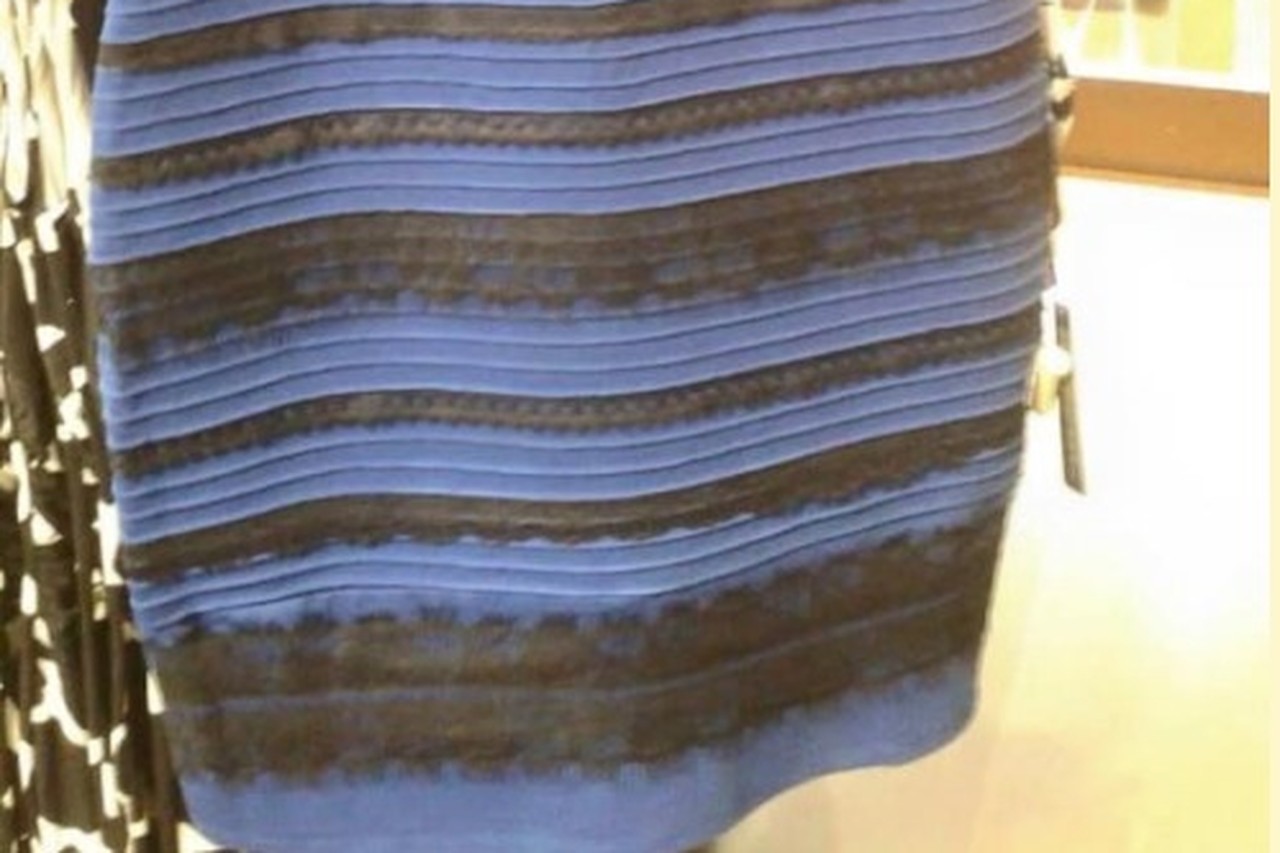
Ken je die beroemde jurk nog die het internet in tweeën splitste? Was hij nou wit met goud of blauw met zwart? De waarheid is dat hij blauw met zwart was. Maar hoe kan het dat mensen zo verschillend waarnemen? Dit heeft alles te maken met de manier waarop onze hersenen informatie verwerken. Soms laten onze percepties ons in de steek, afhankelijk van factoren zoals licht en context. Dit laat zien dat we niet altijd kunnen vertrouwen op wat we zien – of denken te zien.
Verhalenverteller
De Britse neurowetenschapper Anil Seth legt uit dat onze ervaringen een soort verhaal zijn dat onze hersenen maken. Dit verhaal is gevormd door wat we om ons heen zien en wat er in ons lichaam gebeurt. Wat wij ervaren, komt dus niet altijd overeen met de echte wereld. In zijn boek *Incognito* legt David Eagleman uit dat ons bewustzijn maar een klein deel is van wat er in onze hersenen gebeurt. De meeste dingen die we denken en voelen, gebeuren zonder dat we het doorhebben. Wat we als ‘realiteit’ zien, is eigenlijk een combinatie van wat we eerder hebben meegemaakt en hoe we die dingen interpreteren.
Daniel Kahneman, een bekende psycholoog, vertelt ons ook dat onze emoties en vooroordelen een grote rol spelen in hoe we dingen waarnemen. Hoe we ons voelen kan ons beeld van een situatie veranderen. Stel je voor dat je net een spannend boek hebt gelezen over een detective. Iemand zegt iets wat normaal gesproken onschuldig is, maar jij denkt: “Is dat een aanwijzing?”. Dat heet het ‘priming effect’ (Bargh & Pietromonaco, 1982). Dit laat zien hoe onze gemoedstoestand invloed heeft op wat we horen en begrijpen.
We see the world as we are
Thich Nhat Hanh, een bekende zenmeester, benadrukt dat onze kijk op de wereld sterk beïnvloed wordt door onze gedachten en gevoelens. Als hij zegt: “we don’t see the world as it is, we see the world as we are,” bedoelt hij dat onze visie op de werkelijkheid altijd subjectief is. Dit idee sluit aan bij mindfulness, waarbij we leren om ons bewust te zijn van onze gedachten en hoe deze onze kijk op de wereld beïnvloeden.
Het is interessant om te beseffen dat onze hersenen niet alleen de wereld om ons heen waarnemen, maar ook actief onze eigen werkelijkheid maken. Dit kan ons helpen om meer begrip en empathie voor anderen te hebben, omdat iedereen zijn eigen unieke manier van kijken heeft, gevormd door persoonlijke ervaringen. Door deze inzichten te omarmen, kunnen we leren om onze werkelijkheid opnieuw te bekijken en beter om te gaan met de uitdagingen van het leven.
Reality, real or not?
Do you remember that famous dress that split the internet in two? Was it white and gold or blue and black? The truth is that it was blue and black. But how is it that people perceive it so differently? This has everything to do with how our brains process information. Sometimes our perceptions let us down, depending on factors like lighting and context. This shows that we cannot always trust what we see—or think we see.
The Storyteller
British neuroscientist Anil Seth explains that our experiences are like a story created by our brains. This story is shaped by what we see around us and what happens inside our bodies. What we experience does not always match the real world. In his book *Incognito*, David Eagleman points out that our consciousness is just a small part of what happens in our brains. Most of our thoughts and feelings occur without our awareness. What we perceive as ‘reality’ is actually a mix of our past experiences and how we interpret them.
Psychologist Daniel Kahneman also tells us that our emotions and biases play a significant role in how we perceive things. How we feel can change our view of a situation. Imagine you just read an exciting detective novel. If someone says something normally innocent, you might think, “Is that a clue?” This is known as the ‘priming effect’ (Bargh & Pietromonaco, 1982). It demonstrates how our mood influences what we hear and understand.
We see the world as we are
Thich Nhat Hanh, a renowned Zen master, emphasizes that our view of the world is heavily influenced by our thoughts and feelings. When he says, “we don’t see the world as it is, we see the world as we are,” he means that our perspective on reality is always subjective. This idea connects with mindfulness, where we learn to be aware of our thoughts and how they shape our worldview.
It’s fascinating to realize that our brains not only perceive the world around us but also actively construct our own reality. This understanding can help us develop more compassion and empathy for others, as everyone has their unique way of seeing things, shaped by personal experiences. By embracing these insights, we can learn to reconsider our reality and better navigate the challenges life presents.
Sources:
Bargh, J. A., & Pietromonaco, P. R. (1982). Automatic Information Processing and Social Perception: The Influence of Trait Information, Affective Information, and Contextual Information on Person Perception.
Eagleman, D. (2011). Incognito: The Secret Lives of the Brain.
Kahneman, D. (2011). Thinking, Fast and Slow.
Seth, A. (2018). Being You: A New Science of Consciousness.
Nhat Hanh, T. (2008). The Heart of the Buddha’s Teaching: Transforming Suffering into Peace, Joy, and Liberation.
Photo: Het Nieuwsblad
 Liane Kusters coaching & training
Plaats een reactie